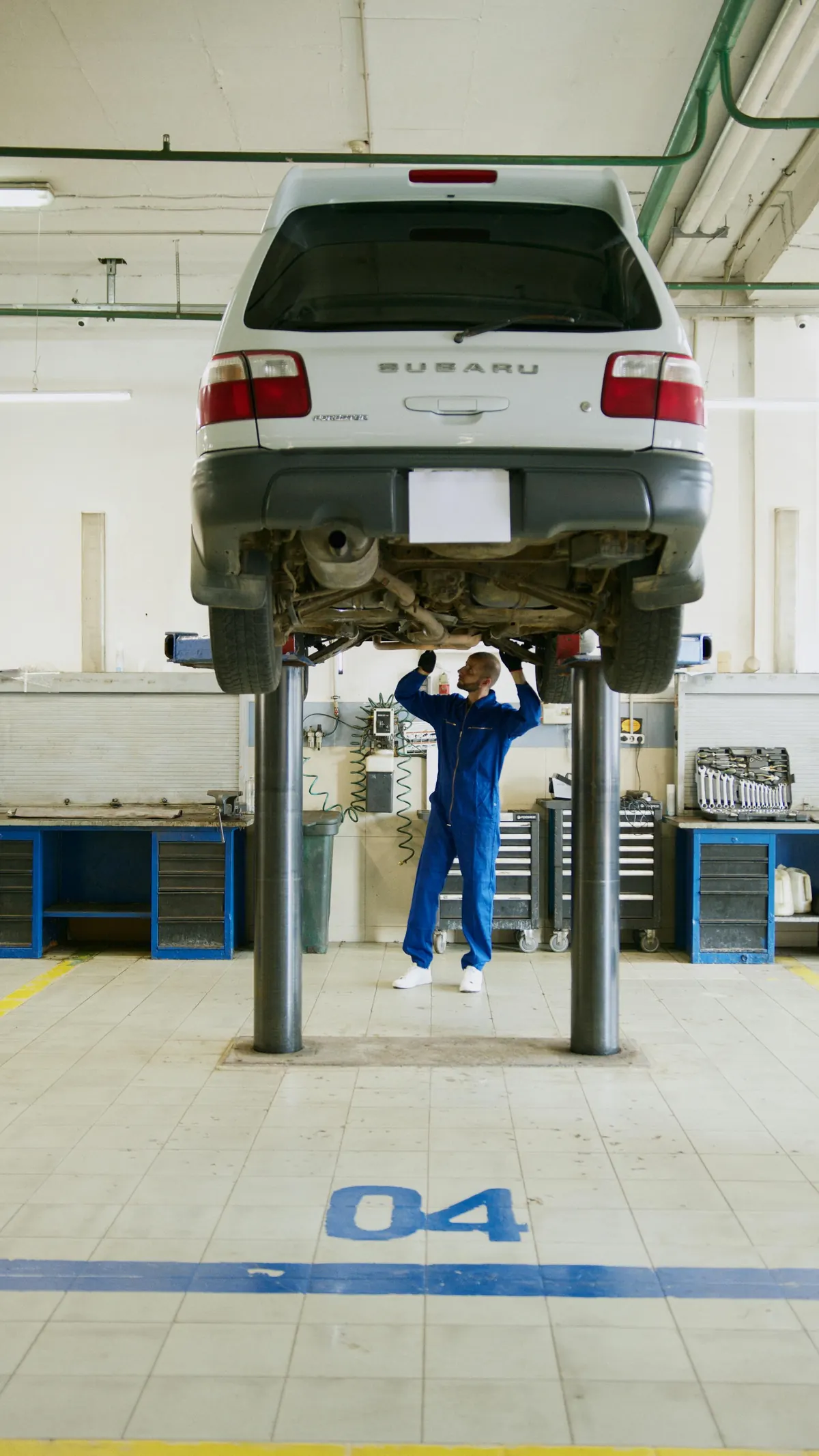
If you have searched for 'DVLA MOT check', you are in good company. Millions of people type that phrase every year. But MOT records are actually held by the DVSA, not the DVLA. These are two entirely separate government agencies. Understanding which agency holds what tells you exactly what you can find out for free, what you must pay for, and what simply does not exist in any public database.
DVLA vs DVSA: The Misconception Explained
The DVLA (Driver and Vehicle Licensing Agency) and the DVSA (Driver and Vehicle Standards Agency) are two distinct executive agencies of the Department for Transport. They were a single body until 2014, when DVSA was created by merging the Vehicle and Operator Services Agency (VOSA) with the Driving Standards Agency (DSA). The split created significant public confusion that persists today, because both names start with DV and both deal with vehicles.
The DVLA, headquartered in Swansea, is responsible for vehicle registration, road tax (Vehicle Excise Duty), driver licensing, V5C logbooks, SORN declarations, and the transfer or retention of number plates. The DVSA, with operational centres across Great Britain, is responsible for setting and enforcing vehicle testing standards, administering the MOT scheme, conducting driving tests, and overseeing commercial vehicle operators.
The practical consequence of this split is straightforward: if you want to know whether a vehicle has a current MOT, when it expires, or what it failed on historically, that data lives with the DVSA. If you want to know whether a vehicle is currently taxed, who the registered keeper is (subject to privacy restrictions), or whether a SORN is in force, that data lives with the DVLA.
What the DVLA Actually Holds on Your Vehicle
The DVLA vehicle register is one of the largest administrative databases in the UK. For each registered vehicle it holds the vehicle identification number (VIN), the registration mark, make, model, body type, engine capacity, fuel type, CO2 emissions figure, and the primary colour recorded at first registration. It also holds the date of first registration in the UK, the country of origin if the vehicle was imported, and the current vehicle tax class.
Beyond the vehicle specification data, the DVLA holds keeper records: the name and address of the current registered keeper, the date they became keeper, and a history of previous keepers (though how many previous keepers there have been is not disclosed publicly, only whether there have been any and when the current keeper took over). SORN status is recorded against the vehicle, as is whether the vehicle has been declared scrapped through an Authorised Treatment Facility.
The DVLA also maintains records of personalised and cherished number plate assignments, plate retention certificates, and plate transfer transactions. When a private plate is put on retention rather than transferred directly to another vehicle, the DVLA holds the retention certificate details including the expiry date. This data is operationally separate from MOT records and is not visible through the DVSA's API.
| Data Field | Held by DVLA | Held by DVSA | Publicly Accessible |
|---|---|---|---|
| Vehicle make, model, colour | Yes | Partial (via API) | Yes (free check) |
| Engine size and fuel type | Yes | No | Yes (free check) |
| VIN / chassis number | Yes | No | No (private) |
| Road tax (VED) status | Yes | No | Yes (free check) |
| SORN status | Yes | No | Yes (free check) |
| Registered keeper name/address | Yes | No | No (GDPR protected) |
| Number of previous keepers | Yes | No | No (paid check only) |
| MOT pass/fail result | No | Yes | Yes (free check) |
| MOT expiry date | No | Yes | Yes (free check) |
| MOT failure reasons | No | Yes | Yes (free check) |
| Advisory items | No | Yes | Yes (free check) |
| Mileage at each MOT | No | Yes | Yes (free check) |
| Outstanding finance | No | No | No (paid check only) |
| Insurance write-off category | No | No | No (paid check only) |
| Stolen marker | No | No | No (paid check only) |
What the DVSA Holds: MOT Records in Detail
The DVSA MOT history database contains every digitally recorded MOT test conducted on a UK vehicle since approximately 2005, when paper-based records began to be migrated to the central computer system. For any given test, the record includes: the date of the test, whether it passed or failed, the mileage reading recorded by the tester at the time of the test, any failure items (with the specific reason code and description), and any advisory items noted but not causing a failure. It also records the identity of the authorised test facility (ATF) that conducted the test.
The DVSA opened this data via a public API in 2015, making it available to third parties including developers, motoring journalists, and insurance companies. This is the same API that powers our free MOT history checker and the government's own check service. The data is returned in real time: when you run a check, you are seeing the live record, not a cached snapshot.
Test records for vehicles that have been scrapped are eventually anonymised or removed from the publicly accessible API, though the DVSA retains internal records for operational and fraud investigation purposes. If you run a check on a recently scrapped vehicle and receive no results, this is likely the reason. The vehicle record in the DVLA system will show a scrap declaration, which is a useful cross-reference.
How DVLA and DVSA Records Interact
Although the DVLA and DVSA are separate agencies with separate databases, their records are operationally linked at several points. The most important linkage is road tax: to tax a vehicle online via the DVLA, the system automatically checks the DVSA database to confirm the vehicle has a valid MOT. If the MOT has expired, the DVLA system will block the tax renewal and prompt the owner to get an MOT first. This cross-check is built into the gov.uk/vehicle-tax service and is one of the most practical daily interactions between the two datasets.
A second linkage occurs at SORN. When an owner declares a vehicle off-road via SORN, the DVLA record is updated instantly. If the vehicle is subsequently brought back onto the road and taxed, the system again checks for a current MOT before completing the transaction. This means the two databases are effectively in constant dialogue even though they are technically separate systems maintained by separate agencies.
A third connection exists around vehicle scrappage. When an Authorised Treatment Facility (ATF) scraps a vehicle, it notifies the DVLA, which marks the record as scrapped. The DVSA's API will eventually stop returning results for that registration, reflecting the vehicle's removal from the active fleet. The timing of these two updates does not always align precisely, so there can be a short window where a scrapped vehicle's DVLA record shows it as scrapped but the DVSA API still returns historical MOT data.
The GOV.UK Vehicle Enquiry Service Explained
The government's Vehicle Enquiry Service at gov.uk/get-vehicle-information-from-dvla returns a combined view of data drawn from both agencies. When you enter a registration mark, the service returns: make, colour, year of manufacture, engine size, CO2 emissions, fuel type, current tax status, tax due date, current MOT status, and MOT expiry date. This single-page result is the most common way most private individuals interact with vehicle record data.
What the Vehicle Enquiry Service does not show is the full MOT history with individual test results, failure reasons, and advisory notes. For the complete MOT history, you must use either the DVSA's dedicated MOT history service at history.mot-check.service.gov.uk or a third-party tool like our full history checker. This distinction matters enormously when assessing a used car purchase: the Vehicle Enquiry Service only tells you the current status, not whether the vehicle has a pattern of recurring failures or suppressed mileage readings.
The Vehicle Enquiry Service is also the place to confirm whether a vehicle's tax is valid before driving it. The MOT status shown here is live and pulled directly from DVSA records. If a vehicle shows as having no valid MOT in the Vehicle Enquiry Service, it cannot legally be taxed, and driving it on a public road (other than to a pre-booked MOT appointment) is a criminal offence.
The V5C Logbook: Colour, Condition, and Fraud Warnings
The V5C is the paper registration document issued by the DVLA. The current version, introduced in 2014 and updated in 2019, is printed on pale blue security paper with a holographic watermark strip, microprinting along the border, and a unique document reference number (V5C reference) printed in red ink in the top right corner. The document reference number is 11 digits long and begins with a letter. Every V5C issued since approximately 2014 carries these security features.
The colour of a legitimate V5C matters more than many buyers realise. Older V5Cs issued before 2014 were a salmon-pink colour. Criminals sometimes use these older documents as templates for forgeries because they are simpler to reproduce without modern security printing. If a seller presents a pink V5C for a car registered after 2014, treat this as an immediate red flag. Similarly, any V5C that appears freshly printed on ordinary paper, lacks the holographic strip, or has a document reference number that does not match what the seller claims should be treated as potentially fraudulent.
The physical condition of the V5C itself can also reveal information. A document that has been altered, has correction fluid visible, or has text that appears to be in a slightly different font in certain fields may have been tampered with. The most commonly altered fields in fraudulent V5Cs are the registered keeper's name and address (to match a seller who is not the true keeper) and sometimes the vehicle colour or engine size. Always cross-check the V5C details against the DVLA Vehicle Enquiry Service before completing a private purchase.
How to Verify a V5C is Genuine
- Check the document is pale blue (not pink, unless the car is genuinely old enough to have a pre-2014 document). Pale blue with holographic strip is the current standard.
- Locate the 11-digit document reference number in red ink at the top right. Make a note of it.
- Check the Vehicle Enquiry Service at gov.uk/get-vehicle-information-from-dvla. The vehicle's make, colour, engine size, and year should match the V5C exactly.
- Look through the windscreen at the VIN plate on the dashboard. The VIN on the plate should match the VIN shown in the V5C. They are the same number.
- Check the VIN stamped or pressed into the chassis (usually in the engine bay or under a door sill). This should also match.
- If any of the above steps produce a mismatch, do not proceed with the purchase. Report suspected V5C fraud to Action Fraud (actionfraud.police.uk) or the DVLA directly.
Reporting a Fraudulent V5C
If you believe a V5C you have been shown is fraudulent, you can report it to the DVLA using their online form at gov.uk/report-vehicle-fraud or by calling 0300 790 6802. You can also report it to Action Fraud online. If you have already purchased a vehicle and then discovered the V5C is fraudulent, contact the police as this may constitute a criminal matter involving fraud and potentially receiving stolen goods.
The DVLA has a dedicated vehicle fraud team that investigates cases involving cloned registrations, VIN plate swaps, and false keeper records. Providing them with the registration mark, the document reference number from the V5C you were shown, and any photographs of the vehicle or documents will assist their investigation.
Number Plates, Cherished Transfers, and Q-Plates
One area where DVLA records are particularly important in due diligence is number plate history. A vehicle's registration mark is meant to travel with it through its life, but the personalised plate industry means that many vehicles have had plates removed and replaced with retention certificates, or have received plates transferred from other vehicles. When a plate transfer occurs, the DVLA updates both the donor vehicle's record (which receives an age-related plate) and the recipient vehicle's record (which receives the personalised plate). The transaction is recorded internally by the DVLA but is not displayed in the public Vehicle Enquiry Service output.
The practical significance is this: if you run a search on a vehicle and the registration format does not match the vehicle's age, there has likely been a plate transfer. A 2015 vehicle carrying a plate in the format "A1 ABC" (a format used in 1983) has had a cherished transfer applied. This is entirely legal and common. The registration mark shown in the DVSA's MOT history records will reflect whatever plate the vehicle was running at the time of each test. If the vehicle had multiple plates over its life, different tests in the MOT history may show under different registrations, which can create confusion when tracing full history.
Q-plates (registrations beginning with Q) are assigned by the DVLA to vehicles whose age or identity cannot be established with certainty. These include kit cars built from multiple donor vehicles, imported vehicles that cannot be age-verified against their foreign documentation, and sometimes heavily reconstructed classic vehicles. A Q-plate registration is not itself evidence of anything improper, but it does mean the vehicle's identity is less certain than a standard age-related plate, and you should be prepared to accept that historical MOT data may be incomplete or linked to a different registration.
Age-Related Plates After a Transfer
When a personalised plate is removed from a vehicle (placed on a retention certificate or transferred to another vehicle), the DVLA assigns the donor vehicle an age-related plate. This is a standard number format that reflects the vehicle's year of manufacture. If you are buying a car with an age-related plate that looks notably different from surrounding examples, this may indicate a previous private plate has been removed. This is not a scam, but it does mean the vehicle's earlier MOT history may be recorded under a different registration, which you should ask the seller to explain.
How to Check if a Vehicle Has Had a Plate Transfer
The DVLA's Vehicle Enquiry Service does not explicitly flag plate transfers. However, you can look for clues. If the registration format does not match the vehicle's year on the V5C, a transfer has occurred. The V5C itself will list the current registration and the date it was first registered, and the format of the registration should correspond to the registration period. For example, a vehicle registered in September 2018 should carry a plate in the 18-prefix format (e.g., AB18 XYZ) unless a transfer has been applied. Cross-referencing the MOT history with the current registration and checking for historical tests under a different registration can also reveal a plate change. A paid HPI-type check will explicitly flag previous registrations linked to the VIN.
Using MOT History to Verify Declared Mileage
Every MOT test requires the tester to record the vehicle's odometer reading. This creates a chronological mileage log attached to every vehicle that has had MOTs since 2005. The practical value of this log for a used car buyer is enormous: it gives you an independently verified snapshot of the vehicle's mileage at multiple points in time, making it very difficult for a seller to credibly misrepresent the vehicle's true mileage.
Mileage fraud, sometimes called clocking, involves resetting or altering the digital or analogue odometer to show a lower figure than the vehicle has actually travelled. A clocked vehicle appears to have lower mileage and therefore commands a higher price. The DVSA MOT history makes this fraud far harder to conceal because the mileage at every recorded test is publicly visible. If the odometer currently shows 60,000 miles but the MOT history shows the vehicle had 85,000 miles recorded three years ago, something is wrong.
When reviewing mileage against MOT records, look for a broadly consistent annual mileage progression. An average UK car covers roughly 7,000 to 10,000 miles per year, though this varies significantly by vehicle type and use. A car that shows 12,000 miles at one test, 24,000 at the next, and 38,000 at the one after that is behaving normally. A car that shows 82,000 at one test, 74,000 at the next, and is currently showing 61,000 on the odometer has clearly been clocked and the seller should be able to provide a compelling explanation.
| Mileage Pattern | What It Suggests | Action |
|---|---|---|
| Consistent annual increase (7,000-15,000 miles per year) | Normal domestic use | No concern |
| Very low annual mileage (under 3,000) | Light use, possibly stored, possibly cherished classic | Check service history; ask why |
| Very high annual mileage (over 20,000) | High-use commercial or commuter vehicle | Check wear items more carefully |
| Mileage decreases between tests | Almost certainly clocked | Walk away |
| Large unexplained single-year jump (e.g., 40,000 in one year) | Possible combined period with previous owner, or anomaly | Ask for explanation and service records |
| Identical mileage at two consecutive tests | Odometer failure, or very low use | Query with the seller |
| No mileage recorded at one or more tests | Tester did not record it (rare) or vehicle was not roadworthy at time | Note the gap; seek explanation |
What to Do if You Suspect Mileage Fraud
If the MOT history reveals a mileage inconsistency, do not proceed with the purchase at the asking price. You can report suspected mileage fraud to Trading Standards via the Citizens Advice consumer helpline (0808 223 1133). If the vehicle was sold by a dealer rather than a private seller, the Consumer Rights Act 2015 provides stronger protections and the dealer has greater obligations around accuracy of description. For private sales, the Fraud Act 2006 may apply if the seller knowingly misrepresented the mileage.
Spotting Used Car Fraud with DVLA and DVSA Data
The combination of DVLA vehicle specification data and DVSA MOT history is one of the most powerful free fraud-detection tools available to a private used car buyer. Used together, they can expose several common fraud types before you hand over any money. The key is knowing what patterns to look for in each dataset and how they corroborate or contradict each other.
Identity Fraud and Cloned Vehicles
Vehicle cloning involves giving a stolen or unroadworthy vehicle the identity of a legitimate vehicle with a clean record. The fraudster copies the registration of a real car, often of the same make, model, and colour, and applies cloned plates to the target vehicle. When a buyer runs a standard check on the displayed registration, the results come back clean because they belong to a legitimate vehicle elsewhere. The clone carries the clean record; the real vehicle is driving around with no idea it has been duplicated.
Detecting a clone with free public data requires cross-referencing the vehicle's visible characteristics against the DVLA record. Check that the make, model, colour, and year on the V5C match the Vehicle Enquiry Service output for that registration. Check that the VIN on the V5C matches the VIN physically stamped on the vehicle. If the vehicle has had an MOT recently, the test station details in the DVSA record may reveal where the vehicle was physically located, which you can cross-reference against the seller's claimed location.
Cut and Shut Vehicles
A cut-and-shut is a vehicle fraudulently assembled from the front half of one car welded to the back half of another. Because both donor vehicles existed in DVLA and DVSA records, the resulting hybrid may carry the identity of one of the donors and apparently have a clean record. The physical signs of a cut-and-shut include uneven panel gaps in the central section of the vehicle, mismatched paint in the B-pillar area, welding marks under carpets or door sills, and VINs that do not run continuously along the chassis. The MOT history alone cannot detect this fraud, but a suspicious gap in the history at a point when the vehicle might have been off the road for reconstruction should prompt further investigation.
Using the GOV.UK Enquiry Service to Cross-Check a Seller
- Enter the registration at gov.uk/get-vehicle-information-from-dvla. Confirm make, model, colour, and year match what you are being shown in person.
- Run the full MOT history via our history checker. Note all recorded mileages and look for the pattern described above.
- Cross-check the V5C document reference number. The V5C you are shown should have a reference beginning with a letter followed by 10 digits.
- Compare the seller's name on the V5C with a form of ID they provide. The registered keeper does not have to be the legal owner, but a seller who is clearly not the registered keeper and cannot explain why should prompt caution.
- Verify the VIN on the vehicle physically matches the V5C. Do not rely on the seller to point this out; locate the VIN plate yourself (typically visible through the windscreen on the dashboard, and often stamped in the engine bay or on a sill).
- If anything does not match, ask for an explanation. A legitimate seller will welcome scrutiny. A fraudster will become evasive, change the subject, or apply pressure to complete the purchase quickly.
GDPR, Subject Access Requests, and Record Retention
Both the DVLA and the DVSA hold personal data about vehicle keepers, drivers, and test station staff, and both are bound by the UK General Data Protection Regulation (UK GDPR) as retained post-Brexit law. For individuals, this creates several practical rights. The most commonly exercised is the Subject Access Request (SAR), which entitles any data subject to request a copy of the personal data an organisation holds about them.
A SAR to the DVLA would reveal what the agency holds about you as a registered keeper: your name, address, any vehicles registered to you, tax and SORN history for those vehicles, and any correspondence or enforcement actions linked to your records. This can be useful if you suspect your details have been incorrectly recorded, if you need proof of your vehicle ownership history for legal purposes, or if you want to understand what data was shared with third parties such as parking companies.
A SAR to the DVSA is less commonly used by private individuals but can be relevant if, for example, you were a test station employee, if you were involved in a vehicle testing dispute, or if you believe your vehicle's MOT records contain errors. The DVSA can be contacted for a SAR at their Information Rights team via gov.uk/contact-dvsa. Both agencies are required by law to respond within one calendar month of receiving a valid SAR.
How Long Are DVLA and DVSA Records Kept?
| Record Type | Agency | Approximate Retention Period | Notes |
|---|---|---|---|
| Current keeper details | DVLA | Until keeper changes or vehicle is scrapped | Updated each time keeper changes |
| Previous keeper history | DVLA | Indefinite (internal records) | Number of previous keepers shown in V5C but not names |
| Vehicle registration record | DVLA | Indefinite after scrapping (anonymised) | VRM retired on scrappage |
| SORN declarations | DVLA | While in force, then archived | Historical SORNs may be accessible via SAR |
| MOT test results (individual) | DVSA | Minimum 10 years (publicly accessible) | Anonymised after vehicle scrapped |
| MOT test station records | DVSA | 7 years (operational) | Longer for enforcement purposes |
| Driver licence records | DVLA | Up to 75 years from date of birth | Endorsements removed after set periods |
GDPR and Keeper Privacy: What You Cannot Find Out
The registered keeper's name and address are personal data protected under UK GDPR. You cannot legally discover who owns a specific vehicle by entering its registration number into any public tool. The free Vehicle Enquiry Service and all legitimate third-party MOT checkers deliberately omit keeper identity from their results. Platforms that claim to provide keeper names in response to a registration search are either fraudulent or operating outside the law.
The DVLA does disclose keeper information to authorised third parties under a formal application process. Parking companies, debt collectors acting under a county court judgment linked to a vehicle, and certain professional investigators may apply to the DVLA for keeper data for specific, justified purposes. This process is governed by DVLA's Keeper at Date of Event scheme, and misuse of disclosed data is a criminal offence. For private individuals, there is no route to obtain another person's keeper data through the DVLA.
Dealer Due Diligence: Combining Both Databases
Professional used car dealers in the UK routinely use both DVLA and DVSA data as part of their appraisal and provenance-checking process. Reputable dealers will check the MOT history to verify mileage consistency before pricing a part-exchange. They will cross-reference the V5C against the Vehicle Enquiry Service to confirm the vehicle's identity. And they will run a paid HPI-type check that draws on finance, insurance, and police databases not accessible through free public tools.
From a buyer's perspective, a dealer who can demonstrate this process adds value beyond simply having a forecourt. Look for evidence that the vehicle has been recently checked: a printed HPI certificate, a service history that has been verified against the MOT mileage record, and a V5C that has been confirmed clean. A reputable dealer should be able to answer questions about the MOT history without hesitation and should be able to show you the full check results.
What Dealers Can See That You Cannot
- The number of previous registered keepers (available in the V5C and paid checks, not the free public tool)
- Outstanding finance linked to the VIN via the Finance and Leasing Association register
- Insurance write-off category (A, B, S, or N) from the Motor Insurance Anti-Fraud and Theft Register
- Whether the vehicle appears on the Police National Computer as stolen
- Import or export history in some paid check products
- Historical plate changes linked to the VIN (not just the current registration)
What Both You and the Dealer Can See for Free
- Current MOT status and expiry date via DVSA
- Full MOT history with pass, fail, failure reasons, advisories, and mileage at each test
- Current road tax (VED) status and expiry via DVLA
- SORN status if applicable
- Vehicle make, model, colour, engine size, fuel type, and year of manufacture
- Whether the vehicle has been scrapped (DVLA will show this)
What Neither You Nor the Dealer Can See Without Going to the Agency Directly
- The current keeper's name and address (GDPR protected)
- The full keeper change history with names and dates (accessible only via formal process)
- The VIN in full (visible physically on the vehicle; not returned in API responses for security)
- MOT records for vehicles scrapped and anonymised in the DVSA system
- Internal DVLA enforcement records (accessible via SAR only)
What a Clean V5C Does and Does Not Mean
A common misconception among private buyers is that a vehicle with a genuine, unaltered V5C in the seller's name is safe to buy. The V5C is a registration document, not a certificate of title or a statement of the vehicle's history. Having a clean V5C means the registered keeper information matches what the DVLA holds. It does not mean the vehicle is free of outstanding finance, has not been written off by an insurer, has never been stolen and recovered, or has a consistent mileage history.
The V5C tells you who the DVLA believes to be the registered keeper at the moment it was issued. It does not tell you how the vehicle was used, whether a finance agreement is outstanding, or whether the vehicle was previously involved in a serious accident. A car can have a completely genuine V5C, a clean Vehicle Enquiry Service result, and still be encumbered with substantial outstanding finance that would transfer with the vehicle to a new keeper if not resolved before sale.
Outstanding finance is the single most common issue caught by paid pre-purchase checks that is invisible in free DVLA and DVSA data. Approximately one in three used cars on UK forecourts in any given year has some form of finance associated with it, and a significant proportion of private-sale vehicles are sold while finance agreements are still in force. If the finance company was not notified of the sale and has a legitimate charge over the vehicle, they can legally repossess it from the new keeper, leaving the buyer with no vehicle and limited legal recourse against a private seller who may have disappeared.
The V5C and Outstanding Finance: The Legal Position
Under UK law, a vehicle bought on hire purchase (HP) or personal contract purchase (PCP) finance remains the legal property of the finance company until all payments have been made. The registered keeper shown on the V5C is not the legal owner. If that keeper sells the vehicle before the finance is settled, the sale does not extinguish the finance company's title. The buyer in good faith may have a defence under Section 27 of the Hire Purchase Act 1964 for private purchases, but this defence is narrow and does not cover purchases from dealers. The safest approach is always to confirm via a paid check that no finance is outstanding before completing any private purchase.
DVLA vs DVSA: Who Holds What Data
The question of which government agency holds which data about your vehicle is not just an administrative curiosity — it has direct practical consequences for what you can find out for free, who you should contact when something needs correcting, and how the two sets of records interact when you tax, sell, or scrap a vehicle.
The DVLA (Driver and Vehicle Licensing Agency), based in Swansea, was established under the Vehicle Excise and Registration Act 1994. Its core function is maintaining the national register of vehicles and drivers. Every time a vehicle is first registered in the UK, the DVLA creates a record tied to the Vehicle Registration Mark (VRM) — the number plate. That record holds the vehicle's technical specification, its current road tax status, any SORN declaration, and the identity of the current registered keeper. When you buy a car and notify the DVLA using the V5C, it is this register that is updated.
The DVSA (Driver and Vehicle Standards Agency), created in April 2014 from the merger of the Driving Standards Agency and the Vehicle and Operator Services Agency, holds an entirely separate set of records. Its focus is vehicle standards and testing. Every MOT test conducted at an authorised test facility (ATF) across Great Britain generates a record in the DVSA's central MOT history database. That record includes the test date, the result (pass or fail), the mileage reading taken at the time of the test, any failure items with their specific reason codes, and any advisory notes logged by the tester. Northern Ireland operates under a separate system administered by the Driver and Vehicle Agency (DVA), which is why NI-registered vehicles have a distinct check process.
How the Two Agencies Share Data
Despite being separate organisations, the DVLA and DVSA share data at a number of operational junctions. The most visible is at road tax renewal: when a keeper taxes a vehicle through the gov.uk/vehicle-tax service, the DVLA system automatically queries the DVSA database in real time to confirm the vehicle has a current MOT. If the MOT has lapsed, the system blocks the tax renewal and directs the keeper to obtain a test first. This cross-check has been in place since the paper tax disc was abolished in October 2014.
A second sharing point is at the MOT testing station itself. When a tester opens an MOT test record in the DVSA's Manage Your MOT online system, the vehicle's current registered details from the DVLA are pulled in automatically. This means the tester is working with live DVLA registration data at the point of the test, which is how the MOT record comes to include the vehicle's current make, model, and colour as held by the DVLA — even though the DVSA does not maintain its own vehicle specification database independently.
A third linkage occurs when a vehicle is scrapped. An Authorised Treatment Facility notifies the DVLA, which marks the record as permanently scrapped and retires the VRM. The DVSA's API subsequently stops returning public results for that registration, though internally the DVSA retains records for fraud investigation and operational purposes. The timing of the two updates does not always synchronise precisely, which can occasionally result in a short window where the DVLA shows a vehicle as scrapped but the DVSA API still returns historical test data.
Accessing Each Agency's Data
For most users, the easiest route to both datasets is the gov.uk Vehicle Enquiry Service, which presents a combined view using a single registration mark. However, the Vehicle Enquiry Service shows only the current MOT status and expiry date — not the full MOT history. For the full history with individual test results, you need either the DVSA's dedicated MOT history service at history.mot-check.service.gov.uk or a third-party tool such as our free MOT history checker, which queries the same DVSA API.
If you need to contact either agency directly — for example to correct a vehicle record error, update keeper details, or raise a query about an MOT — the correct routes are gov.uk/contact-dvla for the DVLA and gov.uk/contact-dvsa for the DVSA. Contacting the wrong agency is a common mistake that wastes time. As a rule: road tax, V5C, keeper details, number plates, and SORN all go to the DVLA; MOT tests, test station standards, and driver testing go to the DVSA.
What the V5C Logbook Tells You vs MOT Records
One of the most useful mental frameworks for any used car buyer is understanding that the V5C and the MOT history are complementary records that tell different stories about the same vehicle. Neither is sufficient on its own. Together, they provide a far more complete picture than either can deliver alone — and the points where they contradict each other are often where fraud or serious vehicle issues hide.
The V5C (Vehicle Registration Certificate, commonly called the logbook) is a DVLA document. It records the vehicle's registered keeper at the time of issue, the vehicle's technical specification as recorded at first registration, the date the vehicle was first registered in the UK, the number of former keepers (though not their names), and the date the current keeper took over the vehicle. It is, in essence, a record of who is associated with the vehicle and what the vehicle technically is. It tells you nothing about how the vehicle has been used, whether it has been reliable, or whether its mileage is genuine.
The MOT history, held by the DVSA, records how the vehicle has performed against the annual roadworthiness standard over its life. Each entry in the MOT history shows the test date, the result, the mileage reading at the time, and any failure or advisory items. Read together as a sequence, the MOT history becomes an independently verified log of the vehicle's mileage progression and its recurring mechanical issues. This is information the V5C cannot provide at all.
Why You Need Both
Consider a private purchase scenario. The seller shows you a V5C in their name, listing the vehicle as a 2016 diesel hatchback, currently with one previous keeper. That tells you the DVLA record is consistent with what the seller claims. It does not tell you whether the mileage on the odometer is genuine, whether the vehicle has had repeated brake failures at MOT, or whether there was a two-year gap in testing history when the vehicle may have been off the road.
Running the MOT history alongside the V5C addresses these gaps. The MOT history will confirm the mileage progression (or reveal a suspicious decrease), show whether the vehicle has had the same advisory items raised repeatedly without being resolved, and reveal any gaps in testing that the seller should be able to explain. The two records together also cross-check the vehicle's description: if the V5C says the vehicle is blue but the MOT history consistently records it as silver, one record is wrong — and either the vehicle has been resprayed or the V5C has been altered.
Anomalies That Reveal Fraud
Several specific patterns of anomaly, when the two record types are compared, are strong indicators of fraud or serious issues:
- Mileage on the odometer lower than the last MOT record: The vehicle has almost certainly been clocked. The MOT mileage is independently recorded by the test station and is very difficult to retrospectively alter.
- V5C keeper change date does not match an MOT history gap: If the V5C shows a keeper change three years ago but the MOT history shows continuous testing with no ownership-change behaviour, the keeper record may have been altered.
- Vehicle colour in the V5C does not match MOT records: Both sources record the colour. A discrepancy can indicate a respray (legitimate but worth investigating) or a V5C that has been tampered with to match a cloned vehicle.
- Number of previous keepers inconsistent with MOT test locations: If test stations cluster geographically around a single area through the whole history but the V5C shows a different historical address, the previous-keeper count may have been altered to make the car appear more desirable.
For a full overview of what the MOT history reveals beyond basic pass or fail status, see our guide to MOT advisory notes and what they mean.
Understanding DVLA Vehicle Enquiry Service
The DVLA Vehicle Enquiry Service (VES), accessible at gov.uk/get-vehicle-information-from-dvla, is the primary free tool through which members of the public interact with vehicle registration data. It is widely used by private buyers before a test drive, by parking enforcement companies checking whether a vehicle is taxed, and by motorists wanting a quick confirmation of a vehicle's basic status. Understanding precisely what it shows — and what it deliberately omits — prevents misplaced confidence in what a clean result actually means.
When you enter a registration mark into the Vehicle Enquiry Service, the result page returns the following data fields: make, year of manufacture, engine size, CO2 emissions figure, fuel type, primary colour, current road tax (VED) status with the tax due date or the date the vehicle went SORN, current MOT status (valid or not), and MOT expiry date. All of this data is drawn from the DVLA register, with the MOT status and expiry date pulled in real time from the DVSA's API.
What the Vehicle Enquiry Service Does Not Show
The Vehicle Enquiry Service is deliberately limited in scope. It does not show:
- The full MOT history — only the current status and expiry date. Individual test results, failure reasons, advisories, and historical mileage readings are not returned.
- The keeper's name or address, or any previous keeper details. This data is GDPR protected and is not accessible via the public interface.
- The number of previous registered keepers. That figure appears on the V5C document itself, not in the online tool.
- Any outstanding finance, insurance write-off category, or stolen status.
- Plate transfer history or previous registrations.
- The full 17-character VIN. This is held by the DVLA but is not exposed via the public API for security reasons.
- Historical SORN declarations (only the current status is shown).
How It Differs from a Full MOT History Check
The critical distinction is between current status and historical pattern. The Vehicle Enquiry Service answers the question: "Is this vehicle currently taxed and does it have a valid MOT?" That is a useful one-line answer, but it is not sufficient for a used car purchase decision. A vehicle can have a valid MOT today and still have a history of repeated failures, documented brake or structural advisories that have never been resolved, or a mileage record that shows clear signs of odometer manipulation.
A full MOT history check, which queries the DVSA's dedicated history API rather than the simplified combined result in the VES, returns every recorded test since approximately 2005. This reveals mileage at each test, all failure items with their specific reason codes (such as "nearside front brake pad worn below minimum thickness"), all advisory items, and the test station that conducted each test. This level of detail is what transforms a standard vehicle check into a genuinely useful pre-purchase tool.
To run a full MOT history check, use our MOT history checker or the government's own service at history.mot-check.service.gov.uk. Both are free and return the same underlying DVSA data. The difference between them is purely in presentation and additional context provided.
There is one important practical use of the VES that goes beyond car buying: confirming a vehicle is taxed before lending, borrowing, or driving it. If you are asked to move a friend's car or collect a vehicle, entering its registration into the VES takes approximately thirty seconds and confirms it can be legally driven on a public road. If the result shows the vehicle as having no valid tax or no valid MOT, driving it (other than to a pre-booked MOT appointment in the case of an expired MOT) is a criminal offence that can result in a fixed penalty, a court summons, and potentially having the vehicle seized.
Keeper Changes and Their Effect on MOT Records
A common question from used car buyers is whether the MOT certificate transfers to a new owner when a vehicle is sold. The answer is straightforward: yes, the MOT travels with the vehicle. When ownership changes, the MOT certificate remains valid until its expiry date regardless of who the registered keeper is. The new keeper does not need to obtain a fresh MOT simply because they have bought the vehicle, provided the existing certificate has not expired.
However, there is an important nuance. The MOT certificate is issued against the vehicle registration mark, not against any individual keeper. This means that if a vehicle is sold while an MOT is still valid, the new keeper inherits that certificate and can tax the vehicle using it. The DVLA will process the keeper change and the new keeper can renew road tax without needing a new MOT, provided the existing certificate covers the tax renewal date.
What a Keeper Change Looks Like in DVLA Data
From the DVLA's perspective, a keeper change generates a discrete update to the vehicle record. The previous keeper's details are archived (though not publicly visible in the VES), the number of former keepers is incremented, and the new keeper's name and address are recorded along with the date they became keeper. The V5C issued to the new keeper will show the new keeper's details and will note the number of previous keepers — typically listed as "2 former keeper(s)" or similar, though names and addresses of former keepers are not printed on the document.
The date a keeper change is processed at the DVLA does not always correspond precisely to the date of the actual sale. Keepers are legally required to notify the DVLA of a change within a reasonable timeframe, but there is no strict statutory deadline in days. In practice, online keeper changes via gov.uk/sold-bought-vehicle are processed immediately, but postal notifications using the yellow section of the V5C can take several weeks to appear in the DVLA register. This creates a window during which the DVLA record still shows the previous keeper even though the vehicle has already been sold.
Buying from Trade vs Private: What the Records Show
When you buy from a franchised or independent dealer, the keeper change process works slightly differently. Dealers often hold a vehicle as a "trade" entry in the DVLA system, meaning the dealer is not formally registered as keeper during the time the vehicle sits on the forecourt. The vehicle may go from the previous private keeper directly to the new retail buyer in the DVLA record, without the dealer appearing as an intermediate keeper. This is entirely normal and legal — it is why a vehicle sold by a dealer may show fewer keepers than you might expect given its age and service history.
In a private sale, both parties have distinct responsibilities under the V5C change of ownership process. The seller must complete the yellow "sell, transfer or part-exchange your vehicle" section and send it to the DVLA, retaining a receipt for their own records. The buyer receives the remainder of the V5C (the blue and white sections), which they should register in their own name promptly. Running an MOT history check immediately after purchase gives the new keeper a baseline record of the vehicle's condition at the point they took ownership.
How Insurers Use DVLA and MOT Data
UK motor insurers access both DVLA and DVSA data as part of their underwriting and claims verification processes, though the extent and method of access differs between the two datasets. Understanding how insurers use this data matters both when you are taking out a policy and when you need to make a claim — because discrepancies between what you have declared and what government records show can result in policy voidance or claim refusal.
At the underwriting stage, insurers use the DVLA's Vehicle Enquiry API to pull vehicle specification data — make, model, engine size, fuel type, and year of manufacture — directly from the government register. This is why most online quote systems ask only for your registration mark rather than requiring you to manually enter vehicle details. The insurer pulls the DVLA record automatically and pre-populates the quote with the registered specification. If the vehicle has been modified in a way that changes its specification (engine swap, increased engine capacity, structural modifications), the DVLA record will not reflect this unless the keeper has notified the DVLA of the change — and many do not. The result is a policy based on the unmodified specification, which can invalidate the policy in the event of a claim.
MOT Data and Claims Verification
At the claims stage, DVSA MOT data plays a more significant role than many policyholders realise. When a claim is submitted, particularly for a total loss, the insurer will typically run a full MOT history check on the vehicle as part of their assessment. This serves two purposes: verifying the vehicle's mileage history (which affects its pre-accident value) and checking for any advisories or recurring defects that might be relevant to the cause of the incident.
If a vehicle was involved in an accident due to a known mechanical defect — brake failure, for example — and the MOT history shows repeated advisories for brake wear that were never resolved, the insurer may argue that the policyholder failed to maintain the vehicle in a roadworthy condition. This can be used to reduce or contest a claim payout, particularly where the vehicle did not have a valid MOT at the time of the incident.
What Discrepancies Trigger Problems
- Mileage misrepresentation: If the mileage declared when taking out a policy is significantly lower than the mileage shown in the MOT history at a similar date, the insurer may treat this as a material misrepresentation that voids the policy.
- No valid MOT at time of incident: Driving without a valid MOT does not automatically void a motor insurance policy, but it can be used by an insurer as evidence that the vehicle was not being properly maintained, particularly if a mechanical defect contributed to the incident. Some policies include explicit clauses about vehicle roadworthiness.
- Vehicle specification mismatch: If the vehicle has been modified and the modification is not declared, but the DVLA record reflects the standard unmodified specification, the insurer may void the policy for non-disclosure of a material fact.
- Keeper not matching policyholder: If the policyholder is not the registered keeper and has not disclosed this, some policies may treat it as a misrepresentation. Always ensure the policy reflects the actual keeper and user arrangement accurately.
Insurers also use DVLA and DVSA data after claims to detect fraud. If a vehicle has been declared a total loss and is then scrapped via an ATF (updating the DVLA record), but the same registration subsequently appears in an MOT test record (suggesting the vehicle is somehow still being driven), this inconsistency will be flagged in cross-database checks. Insurers share data through the Claims and Underwriting Exchange (CUE) register, and patterns of inconsistency between DVLA records, DVSA MOT records, and claims history are among the signals used to identify potentially fraudulent claims.
Requesting Your Own Vehicle Data from DVLA
Under Article 15 of the UK General Data Protection Regulation (UK GDPR), any individual has the right to request a copy of the personal data an organisation holds about them. This is known as a Subject Access Request (SAR). Both the DVLA and the DVSA are bound by UK GDPR, and both are required to respond to a valid SAR within one calendar month of receipt.
A SAR to the DVLA will produce a copy of the data the agency holds about you in your capacity as a registered keeper. This typically includes your name and address as held on the register, a list of vehicles registered to you (current and, where retained, historical), the date you became keeper of each vehicle, road tax and SORN history for those vehicles, and records of any correspondence or enforcement actions linked to your keeper record. If you have been involved in any dispute with the DVLA — such as a penalty charge, a V5C query, or a number plate issue — the correspondence relating to that dispute should also be included in the SAR response.
How to Submit a SAR to the DVLA
The DVLA accepts Subject Access Requests submitted via their online contact form at gov.uk/contact-dvla. Select the "data protection" or "personal data" category. You will need to provide proof of identity — typically a copy of a driving licence or passport — and sufficient information to allow the DVLA to locate your records (your full name, current address, and ideally your driver number from your licence). There is no fee for a SAR under UK GDPR. The DVLA is required to respond within one calendar month, though in practice the response may take slightly longer during busy periods. If you do not receive a response within one month, you can escalate to the Information Commissioner's Office (ICO) at ico.org.uk.
What DVLA Holds on Your Vehicle vs What It Holds on You
It is worth distinguishing between data held about you personally (your keeper record, address history, correspondence) and data held about your vehicle (the technical specification, VRM, MOT status). The MOT status data is held by the DVSA, not the DVLA. A SAR to the DVLA will not return the full MOT history; for that, you should use the DVSA's free MOT history service or submit a separate SAR to the DVSA via gov.uk/contact-dvsa.
SARs are particularly useful in the following circumstances: if you believe the DVLA holds an incorrect address or keeper record for you; if you want to understand what data was released to a third party (such as a parking company) in connection with your vehicle; if you are involved in a legal dispute where evidence of vehicle ownership history is needed; or if you suspect your keeper details have been accessed without your knowledge. The DVLA's data protection officer can be contacted through the standard gov.uk/contact-dvla route if you have concerns about how your data is being used.
Official Government Resources
The following official UK government sources provide authoritative information relevant to this topic:
- GOV.UK: Official MOT history checker
- Driver and Vehicle Standards Agency (DVSA)
- GOV.UK: Get vehicle information from DVLA
Cross-referencing both the DVLA and DVSA databases gives you a complete picture of a vehicle's legal status, ownership record, and test history.
Frequently Asked Questions
Do MOT records come from the DVLA or the DVSA?
Can I find out who owns a car from its number plate?
What is the difference between the V5C document reference number and the VIN?
How do I make a Subject Access Request to the DVSA for my vehicle's MOT records?
What happens to MOT records when a vehicle is scrapped?
Is the V5C proof of ownership?
Can I check if a registration plate has been transferred or retained?
What does it mean if there is a large mileage gap in the MOT history?
How do I update my address on the V5C with the DVLA?
Does the free check show whether a car has outstanding finance?
What is a Q-plate and why does it matter for MOT history?
Planning a Car Purchase?
Our free MOT history tool queries the same DVSA database used by insurers, dealerships, and vehicle inspectors, returning official test records instantly and at no cost.
MOT Check vs HPI: Full ComparisonRelated MOT Guides
What Is an MOT Test? Complete UK Guide (2026)
An MOT is an annual safety inspection required for all UK vehicles over three years old. It checks…
How Long Does an MOT Last? Certificate Duration Explained
An MOT certificate lasts exactly 12 months from the test date. You can renew up to one calendar…
Top 10 MOT Failure Reasons in the UK (2026 Data)
The most common MOT failure reasons are lighting faults (around 18% of failures), followed by…