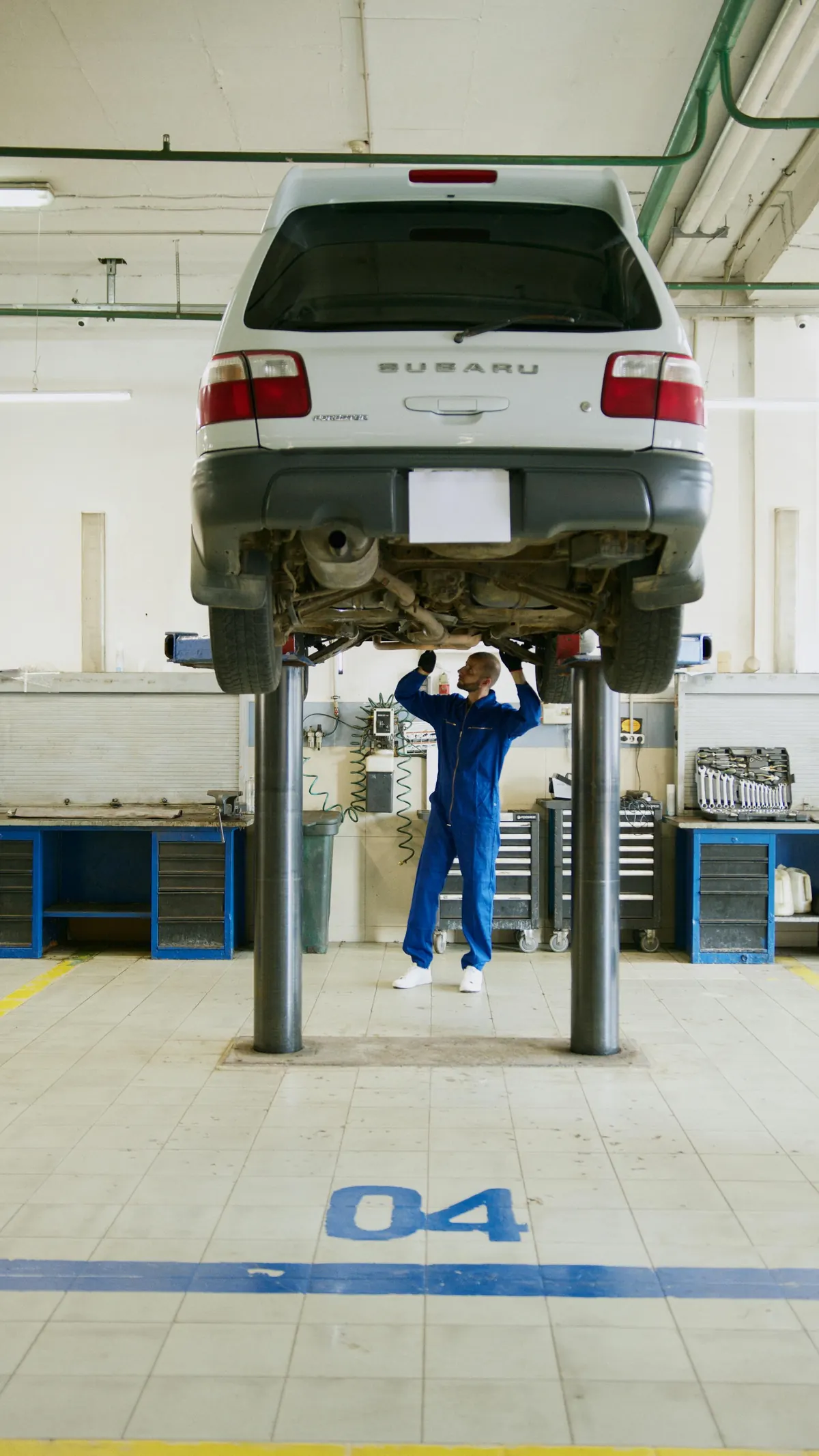
If you own a car in the UK, the MOT is something you cannot ignore. It is a legal requirement, and skipping it can cost you far more than the test itself. This guide covers everything - from what gets checked to what happens if you fail.
What Does MOT Stand For?
MOT stands for Ministry of Transport - the government department that introduced the test back in 1960. The ministry no longer exists under that name, but the test name stuck.
Today the DVSA (Driver and Vehicle Standards Agency) administers the scheme in England, Scotland and Wales. Northern Ireland uses a separate DVA scheme - see our Northern Ireland MOT guide for the differences.
You can check any vehicle's MOT status for free right now - just enter the number plate. No sign-up, no charge.
Which Vehicles Need an MOT?
Cars, vans, motorcycles and most other road vehicles need an MOT once they turn three years old. After that, you need a fresh test every single year.
Some vehicles are exempt: those manufactured before 1 January 1960, certain agricultural machines, and vehicles declared SORN (off the road). Electric vehicles are not exempt - they follow the same three-year rule.
Northern Ireland vehicles get an extra year - their first test is due at four years old, not three. Everything else after that is annual, the same as the rest of the UK.
What Does the MOT Actually Check?
The tester works through a standardised DVSA checklist covering dozens of items. The main areas are: brakes, lights and signals, tyres and wheels, steering, suspension, emissions, bodywork, windscreen and wipers, seatbelts, and horn.
Since 2018, defects are graded into four categories: Dangerous (immediate fail, do not drive), Major (fail, needs fixing), Minor (recorded but passes), and Advisory (informational note, passes).
Testers cannot inspect hidden internals - engine components, clutch, gearbox. They only assess what is accessible and safely testable from the outside and underneath the vehicle.
How Long Does the Test Take?
For a standard car, expect 45 to 60 minutes. Larger vehicles or those with obvious issues to investigate can take longer.
You do not need to be present. Most people drop the car off, go about their day, and collect it later. The garage will call or text you with the result.
Book a time that suits you. Early morning slots tend to be the quickest - the garage is fresh and the queue is short. Lunchtime slots can sometimes run late.
How Much Does an MOT Cost?
The government caps the maximum fee at 54.85 pounds for cars. Many garages charge less - deals from around 25 to 30 pounds are common, particularly for off-peak bookings.
Motorcycles have a lower cap of 29.65 pounds. Larger vehicles attract different rates.
Price matters, but so does quality. A cheap test at a sloppy garage can miss defects a thorough tester would catch. Check Google reviews before booking somewhere purely on price.
How to Book Your MOT
Book at any DVSA-approved test station - most garages, dealerships and dedicated MOT centres qualify. The DVSA has a search tool on its website to find your nearest approved station.
You can book up to 28 days before your certificate expires and the new one will still start from the old expiry date - so you do not lose any time by renewing early.
Most garages now take online bookings. It takes two minutes and you can compare prices and availability easily across your local area.
What Happens If Your Car Fails?
A fail means no certificate is issued. You get a refusal notice listing every failed item. The car cannot be driven except to a pre-booked retest at the same or another test station.
If the fault is minor and the garage can fix it the same day, a retest is usually free or heavily reduced in price within a set window (typically one working day).
You are not obliged to have the failing garage do the repairs. For expensive jobs, get a couple of quotes from other garages before committing.
What Are MOT Advisories?
An advisory is a note about something that is not serious enough to fail the car right now, but that you should keep an eye on. Your car still passes - you get the certificate.
Common advisories include tyres approaching the legal tread limit, minor brake pad wear, and light surface corrosion. They are an early warning, not an emergency.
Do not dismiss them, though. An advisory this year often becomes a failure next year if ignored. Read our full MOT advisory guide to understand what to do with each one.
The 2018 MOT Overhaul
In May 2018 the MOT test was significantly overhauled. The old pass/fail/advisory system was replaced with four categories: Dangerous, Major, Minor, and Advisory.
Dangerous defects mean the car must not be driven away under any circumstances. Major defects fail the car. Minor defects are noted but pass. Advisories are informational notes only.
The 2018 changes also tightened diesel emissions rules significantly. A blocked or removed DPF (Diesel Particulate Filter) is now a straightforward and expensive failure.
Checking Your MOT Status Online
You do not need to hunt through the glovebox for a paper certificate. Our free MOT checker shows your exact expiry date and current status in seconds.
Enter the number plate and you get the MOT status, expiry date, vehicle make, colour and year - all from the live DVSA database.
Want to see every test the vehicle has ever had? Our MOT history checker shows every test since around 2005, including pass or fail results, failure reasons, advisory items, and mileage at each test.
Preparing Your Car the Day Before
A quick pre-MOT walk-around the evening before the test can save you the cost and hassle of a retest. Check every light - headlights, brake lights, indicators, fog lights, reversing lights. Blown bulbs are the single most common reason for failure.
Look at your tyres. The legal minimum tread is 1.6mm. If any tyre looks close, consider replacing before the test - it will fail if it is under the limit.
Top up your screen wash, make sure the windscreen has no chips in the driver's line of sight, and check the wipers clear the screen cleanly. All simple, all avoidable failures.
MOT and Your Car Insurance
An expired MOT does not just mean a fine - it can void your car insurance. Most policies require the vehicle to be roadworthy and legally compliant at all times.
Drive on an expired MOT and have an accident, and your insurer may refuse to pay out. The third party's repair bills then fall to you personally. That could easily run to tens of thousands of pounds.
It is one of the reasons the stakes are much higher than most drivers realise. Read more about driving without an MOT for the full legal picture.
MOT vs Regular Servicing
Many drivers assume a full service counts as an MOT, or vice versa. It does not. They are completely different things.
A service covers maintenance - oil change, filters, belts, fluid top-ups. An MOT is a safety inspection only. Passing an MOT does not mean the car has been serviced, and a recent service does not mean the car will pass its MOT.
You need both. Some garages offer combined MOT and service packages at a discount, which can be good value if both are due around the same time.
The MOT Test Process Step by Step
Most drivers hand over their keys and collect the car an hour later without any real idea of what happened in between. Understanding the sequence of the test helps you predict what the tester will find and prepare accordingly.
1. Vehicle Arrival and Initial Checks
When you bring the car in, the tester first confirms the vehicle against the booking details and checks that the registration plate is legible and matches DVLA records. They will also verify that the vehicle identification number (VIN) is visible and readable, typically found on the windscreen base or sill plate. If the VIN is missing or obscured, the test cannot proceed.
At this stage the tester will also note the odometer reading. Mileage is recorded at every MOT and forms part of the official DVSA record. This is why the MOT history checker can reveal potential mileage clocking — any vehicle where the recorded mileage drops between tests is flagged immediately.
2. The Pre-Drive Walkround
Before starting the engine, the tester walks around the exterior. They are checking for bodywork damage with sharp edges that could injure a pedestrian, panel corrosion that has weakened structural integrity, and any visible fluid leaks. All tyres are visually assessed for sidewall damage, bulges, and obvious tread wear. Number plates, lenses, and mirror condition are noted.
3. Lighting and Electrical Checks
The tester works through every light circuit systematically. Headlights are switched to dipped beam and checked for aim using a calibrated beam tester — headlights pointing too high dazzle oncoming traffic, and too low reduces visibility. Main beam, hazard lights, brake lights, reverse lights, number plate illumination, and side lights are all tested in turn. Where fitted, daytime running lights and front fog lights are also checked.
Most common lighting failure: Rear brake lights and number plate lights are the most frequently failed lighting items. Both are easy to check yourself before the test using a helper or a reflective surface.
4. Steering and Suspension
With the vehicle on a specially designed pit or raised on a lift, the tester physically rocks and stresses each suspension component — wishbones, ball joints, tie rod ends, anti-roll bar links, and wheel bearings. Any excessive play, cracking, or perished rubber is recorded. The steering rack and column are checked for free play and secure mounting. Power steering fluid level and any obvious hydraulic leaks are noted.
5. Brakes
Brake testing involves two stages. First, a visual inspection of brake pad thickness (where visible through the wheel spokes), disc condition, and hydraulic lines for corrosion or leaks. Second, a roller brake test where each driven axle is placed on rollers and the tester applies the brakes at a set speed. The machine measures braking force at each wheel independently and flags any imbalance greater than 30% between the left and right wheels on the same axle. The handbrake efficiency is tested separately.
6. Tyres and Wheels
Each tyre is checked for minimum tread depth across the central three-quarters of the tread width around the full circumference. The legal minimum is 1.6mm. Testers use a calibrated gauge, not visual estimation. Sidewall cuts, bulges, and exposed cords cause an immediate fail. Mismatched tyre types on the same axle (for example a run-flat on one side and a standard tyre on the other) also fail.
7. Emissions
For petrol vehicles, a probe is inserted into the exhaust pipe and readings for hydrocarbons (HC) and carbon monoxide (CO) are taken. The acceptable limits depend on the engine type and year of manufacture. Diesel vehicles are tested with a smoke opacity meter — the engine is revved and the density of exhaust smoke is measured. Any black smoke above the threshold is a fail. Catalytic converter and DPF condition is assessed as part of this check.
8. Final Documentation and Certificate Issue
Once all checks are complete, the tester enters all findings into the DVSA's online system in real time. Pass or fail, a VT20 (pass) or VT30 (fail) document is generated. The result appears on the DVSA database almost immediately — you can check your MOT status online within minutes of the test completing. The physical certificate is your copy, but the legal record is held by the DVSA, not the piece of paper.
Every MOT Test Category Explained in Detail
The DVSA's MOT inspection manual divides the test into specific sections. Each section contains multiple individual checks, each graded as pass, minor, major, or dangerous. Here is what testers are actually looking for in each category.
Brakes
Brakes account for a significant proportion of all MOT failures each year. The tester checks brake pad and shoe wear, disc and drum condition, brake pipe integrity, and hydraulic or mechanical connections. On a roller brake tester, the minimum efficiency required is 50% for the service brake (footbrake) and 16% for the parking brake. A vehicle that produces very different braking forces at the left and right wheels — more than 25% difference on the front axle — will fail even if the absolute values are acceptable. This imbalance can cause the vehicle to pull sharply during emergency stops.
Corrosion inside brake pipes is a particular concern on older UK vehicles. The salt used on winter roads accelerates this deterioration significantly. Brake fluid condition is not part of the MOT (it is a service item), but visible contamination or a collapsed flexible hose will fail.
Tyres and Wheels
Beyond the 1.6mm minimum tread depth, testers check that tyres are the correct speed rating and load index for the vehicle, that they are inflated within a reasonable range, and that the tyre size on each axle matches. Foam-filled or solid tyres are not permitted on the public road for most vehicle types. Wheel nuts must all be present and secure — a single missing wheel nut can constitute a major defect depending on the wheel stud count.
Run-flat tyres that have been driven on after suffering a puncture and have sustained internal damage will fail. The sidewall of a run-flat that has been driven flat shows characteristic creasing and distortion that is visible on close inspection.
Lights and Electrical Signalling
Every light the vehicle left the factory with must be present and working. Aftermarket LED replacements for standard filament bulbs are permitted provided they operate correctly and do not produce excessive glare. HID (xenon) headlight systems fitted after manufacture must have automatic beam-levelling and headlight washers — without these, they fail as a major defect because of the dazzle risk to oncoming drivers.
Indicators must flash at a rate between 60 and 120 flashes per minute. A rate outside this range — which can happen if an LED bulb is fitted without a load resistor or relay — is a failure. Emergency vehicle lights (strobes, blue lights) are illegal on civilian vehicles and will also result in failure.
Steering
The tester checks for steering free play (excessive slack before the wheels respond), noise, and resistance that might indicate a failing power steering pump or rack. On a vehicle with a steering lock, they confirm it does not engage during normal driving operation. Steering column mounts and universal joints are physically inspected for cracks and secure attachment. Electric power steering systems are checked for warning light status — an illuminated EPS warning light is typically a major defect.
Emissions
Petrol vehicles registered before August 1992 (pre-catalytic converter) have more lenient CO limits than later vehicles, which must meet tighter European standards. From 1 January 1998 onwards, all petrol cars must have a functioning lambda sensor. Diesel vehicles manufactured after 2009 with a DPF fitted are checked for soot emissions — if the DPF has been removed or bypassed, the test produces a visible smoke failure. Since 2018, a DPF removal is treated as a major defect and an automatic fail regardless of actual smoke readings.
DPF warning: Having a diesel particulate filter removed is illegal for a vehicle used on the public road. Some garages offer DPF removal as an economy measure, but you will fail the MOT and may face a DVSA roadside prohibition notice. The fine for a DPF deletion can exceed £1,000.
Bodywork and Structure
The tester is looking for sharp edges or protrusions that could injure a pedestrian or cyclist, and for structural corrosion that affects the vehicle's ability to withstand an impact. Surface rust that has not penetrated through the panel is not a failure. Corrosion within 30cm of a seatbelt mounting point, suspension mounting, or subframe is a major or dangerous defect depending on severity. Doors must open and close properly. Bonnet catches must secure the bonnet so it cannot open unexpectedly at speed.
Windscreen and Visibility
The windscreen is divided into zones for assessment. A chip or crack larger than 10mm in the driver's direct line of sight (an area roughly 290mm wide centred on the steering wheel) is a major fail. Outside this zone but still within the swept area of the wipers, the limit is 40mm. Cracks that radiate from a chip, regardless of size, are treated more seriously because they are likely to propagate. Wiper blades must clear the windscreen effectively — smearing, streaking, or chattering across the full sweep area is a failure. The washer system must supply fluid to the screen; an empty reservoir is a minor defect.
Seatbelts
Every seatbelt fitted to the vehicle — including rear seats — must retract correctly, latch securely, and show no cuts, fraying, or webbing damage. The inertia reel mechanism is tested by giving the belt a sharp tug; it should lock instantly. Belt stalks must be secure and not show play. Child seat anchor points (ISOFIX) are not part of the MOT inspection, but the upper seat belt mountings above the rear doors are checked for secure attachment.
Vehicles that left the factory without rear seatbelts (many pre-1987 cars) are not required to have them retrofitted. However, if seatbelts have been added after manufacture and they are present in the vehicle, they will be tested. A broken retrofitted belt counts as a failure.
MOT Test Stations: What to Look For
Not all MOT centres are equal. The DVSA approves and monitors test stations, but the standards of individual testers can vary considerably. Choosing the right test station can make a genuine difference to the quality of the result you receive.
Types of MOT Test Station
Franchise dealerships (main dealers for a specific brand) are approved test stations and often have modern, well-equipped test bays. They tend to charge higher rates and may be more inclined to flag advisory items for which they can then offer service work. That is not necessarily a problem — it depends on whether the advisory is genuine.
Independent garages are the most common type of MOT provider. Quality varies enormously. An established independent with a loyal customer base and good Google reviews is often an excellent choice — experienced testers who know local vehicles and charge fair rates.
Dedicated MOT centres (companies that do only MOTs, or MOTs and tyres) tend to be very price-competitive and often have high throughput. Because they do not do general repair work, they have less financial incentive to find additional work on your vehicle, which some drivers view as a positive. Fast-fit chains such as Kwik Fit and Halfords Autocentre fall into this category.
What DVSA Approval Actually Means
A test station must be formally approved by the DVSA before it can conduct MOTs. This involves the garage meeting specified requirements for equipment, bay dimensions, and tester qualifications. Each tester must hold a relevant qualification (typically a City and Guilds or IMI certification) and register individually with the DVSA. The DVSA conducts unannounced inspections and can suspend or withdraw approval if standards fall below requirements.
The DVSA publishes data on test stations including their annual pass/fail rates and the frequency of DVSA spot-check failures. A station with an unusually high pass rate compared to national averages may be conducting insufficiently thorough tests — sometimes called a "friendly MOT". Conversely, a very low pass rate may indicate either an unusually thorough tester or a garage serving a customer base with older, less well-maintained vehicles.
You can find your nearest DVSA-approved test station using the official GOV.UK service at gov.uk/find-mot-test-station. The tool also shows the station's MOT class approvals — not all stations can test all vehicle types.
How to Spot a Quality Tester
Look for a test station that provides a detailed VT30 or VT20 printout with clear explanations of every item noted, not just a pass or fail stamp. A good tester will take time to explain any advisories in plain language. Be wary of any garage that offers an MOT at an implausibly low price with a very short appointment window — a proper inspection of a car cannot be completed in 20 minutes.
Online reviews are useful but should be read critically. Look for detailed reviews that mention specific aspects of the service rather than generic five-star ratings. The DVSA's own monitoring data (available via freedom of information requests and published summaries) gives a more objective picture of test quality.
Online Booking Tips
Most garages now accept online bookings, and many offer a discount for doing so. When booking online, confirm the price is fixed and includes VAT. Some comparison sites book you in at a headline price and add charges for larger engine sizes or vehicle weight. Check whether the booking confirmation states the price clearly. If you need a retest, confirm the garage's retest policy before you book the original test — ideally within one working day and at no charge for a partial retest.
The History and Evolution of the MOT Test
The MOT test has been part of UK road life for over sixty years, but it has changed almost beyond recognition from its original form. Understanding where it came from explains a lot about why it works the way it does today.
1960: The Original Test
The Ministry of Transport test was introduced on 13 September 1960 under the Road Traffic Act 1956. It was compulsory for vehicles more than ten years old and covered just three items: brakes, steering, and lights. The test was a response to rapidly increasing road casualties as car ownership expanded in postwar Britain. In 1960 alone, more than 7,000 people were killed on UK roads — a figure that seems almost inconceivable today.
The original test was bare-bones by modern standards. It lasted minutes rather than an hour and covered none of the structural, emissions, or visibility checks that are now central to the inspection. But it was a genuine innovation — Britain was among the first countries in the world to mandate periodic vehicle safety checks.
1967: The Age Threshold Changes
In 1967 the threshold was lowered from ten years to three years old, bringing a much larger proportion of the national vehicle fleet under the annual test requirement. This was the single biggest expansion of the scheme's scope and established the three-year rule that still applies today.
1977 to 1990: Expanding the Test
Through the 1970s and 1980s, the list of items checked grew steadily. Tyres, windscreens, and seatbelts were added progressively. Emissions testing for petrol vehicles was introduced in 1991, reflecting growing concern about air quality and the increasing sophistication of catalytic converter technology. Diesel emissions testing followed later.
1994: The Rolling Programme
In 1994, the annual testing requirement was adjusted so that the certificate runs for exactly twelve months from the test date rather than from a fixed calendar date. This spread test demand more evenly across the year and gave vehicle owners more flexibility about when to book.
2018: The Major Overhaul
The most significant reform since 1967 came into effect on 20 May 2018. The previous binary pass/fail system was replaced with a three-tier defect classification: Dangerous, Major, and Minor, plus the existing Advisory category. This change brought the UK into line with European testing standards under EU Directive 2014/45/EU and was retained after Brexit as part of the Great Britain retained law framework.
The 2018 reform also introduced specific rules on diesel particulate filters, tightened motorcycle testing, and brought the first formal inclusion of checks on brake fluid condition indicators and tyre pressure monitoring systems (TPMS) where fitted.
Post-2018 to Present
The DVSA continues to update the MOT testing manual as vehicle technology evolves. Hybrid and electric vehicle testing protocols were clarified in 2019 and again in 2022 to reflect the growing proportion of EVs on UK roads. The government has consulted on extending the first MOT threshold to four years for new vehicles, though as of 2026 this has not been implemented. MOT exemptions for historic vehicles (pre-1960) have remained in place throughout.
MOT Statistics: UK Pass and Fail Rates
The DVSA publishes detailed annual statistics on MOT testing across Great Britain. These figures provide a useful picture of national vehicle condition and reveal patterns that most drivers are unaware of.
National Pass Rate
In the most recent full year of DVSA data, approximately 67% of vehicles passed their MOT at the first attempt. That means roughly one in three cars on UK roads fails when it first goes for its annual test. The overall rate has remained broadly stable for the past decade, fluctuating between 65% and 69%.
The first-test pass rate is lower than the ultimate pass rate (after retests), which is above 90%. Most first-test failures involve relatively minor items — a blown bulb, worn wiper blades, or a tyre approaching the tread limit — rather than serious mechanical defects. Nevertheless, the 33% first-test failure rate represents tens of millions of vehicles failing each year.
What Vehicles Fail Most
Older vehicles fail at significantly higher rates than newer ones, as would be expected. Vehicles aged between 10 and 15 years show first-test failure rates around 40% to 45%. Vehicles between 3 and 5 years old (taking their first or second test) pass at rates above 80%.
By vehicle type, motorcycles tend to fail at slightly higher rates than cars, partly because many are used seasonally and can sit unused for months between tests. Light goods vehicles (small vans) fail at broadly similar rates to cars. Heavy goods vehicles tested under separate arrangements have their own statistics.
The most common failure categories nationally are:
- Lighting and signalling — approximately 18% of all first-test failures involve at least one lighting item
- Tyres — tread depth, damage, and condition account for around 10% of failures
- Brakes — brake efficiency, pad wear, and disc condition account for roughly 9%
- Suspension — wear in suspension components accounts for around 8% of failures
- Windscreen and wipers — chips, cracks, and wiper performance account for around 6%
Read our dedicated guide on the most common MOT failure reasons for a full breakdown of each category, with practical advice on how to address them before the test.
Seasonal Patterns
MOT testing is not evenly distributed across the year. There are two distinct peaks: one in March (when many vehicles registered in the March new plate release reach their three-year anniversary) and one in August (the second major plate release month). Garages are significantly busier at these times, and booking lead times can stretch to two or three weeks. If your vehicle's MOT is due in March or August, booking four to six weeks ahead is sensible.
Failure rates also show a modest seasonal pattern. Tests conducted in winter months (November to January) show marginally higher failure rates for lighting items — more failures are discovered because drivers have been using lights more and are more likely to have noticed a problem before the test. Tyre-related failures tend to peak in autumn as summer tyres show wear from the warmer months.
Modified and Imported Vehicles at MOT
Modifications and non-standard vehicles add complexity to the MOT process. Understanding the rules before you modify a vehicle — or buy one that has already been modified — can save considerable expense and frustration.
How Modifications Affect the MOT
The MOT tester assesses a vehicle against the standard applicable to its type approval, not against what it looked like when it left the factory. Most modifications are permitted provided the vehicle still meets the relevant safety standards. However, certain modifications create straightforward failures:
- Lowered suspension that reduces ride height to the point where tyres contact the bodywork under load is a fail
- Aftermarket exhausts that increase emissions above the applicable limits will fail the emissions test
- Tinted windows that reduce front windscreen light transmission below 75% or front side window transmission below 70% are a fail
- Non-standard headlights (HID or LED retrofits) without appropriate beam control are a fail
- Wheel spacers that cause the tyre to protrude beyond the wheel arch are a fail
- Roll cages or other modifications that obstruct seatbelt paths may fail if they prevent correct seatbelt geometry
The DVSA has published guidance on specific modification types through its MOT Inspection Manual. Testers have discretion to fail items that, in their professional judgement, pose a safety risk even if not explicitly listed — but they must record the reason clearly and it is subject to appeal.
Grey Imports
A grey import is a vehicle that was manufactured for a market other than the UK and brought in privately rather than through an official importer. Common grey imports include Japanese-specification cars, certain American pick-up trucks, and EU-market vehicles with specification differences from the UK version.
Grey imports can be MOT tested, but the tester must identify the applicable UK standard for the vehicle type and year. Where no directly equivalent UK vehicle exists, the tester applies the nearest applicable standard. This can cause issues for vehicles with unusual lighting configurations, steering modifications (for driving on the right), or emissions systems calibrated for different fuel grades.
Before buying a grey import: Check the vehicle's registration documents carefully. A vehicle on DVLA records with a “Q” prefix registration was either a grey import or a vehicle of uncertain origin. Q-plate vehicles can be harder to insure and their MOT history may be shorter than their physical age suggests.
IVA Certificates and DVSA Guidance
Vehicles that do not have standard type approval — including kit cars, heavily modified vehicles, and some grey imports — may require an Individual Vehicle Approval (IVA) test before they can be registered for road use. The IVA is a more comprehensive inspection than the MOT and covers all aspects of the vehicle's construction. Once a vehicle holds an IVA certificate and is registered, it is subject to the normal annual MOT from three years old.
If you are buying a kit car or a significantly modified vehicle, always request sight of the IVA certificate. Without it, the vehicle may not be legally registered, and any MOT certificates issued would be of dubious validity. The DVSA's guidance on individual vehicle approval is available on GOV.UK and covers the full list of standards the vehicle must meet.
Official Government Resources
The following official UK government sources provide authoritative information relevant to this topic:
The GOV.UK MOT overview page is updated whenever test standards or fees change — it is the most reliable single reference for current requirements.
Frequently Asked Questions
How much does an MOT cost in 2026?
The maximum fee set by the government is 54.85 pounds for a car. Many garages charge less - deals from around 25 pounds exist. Shop around, but factor in quality as well as price.
Can I drive if my MOT expired today?
No. There is no grace period. The moment the certificate expires, driving the car is illegal. The only exception is driving directly to a pre-booked MOT test appointment.
How do I check my MOT expiry date?
Use our free MOT checker - enter the reg and get the exact expiry date instantly. It uses official DVSA data and requires no registration or login.
What happens if my car fails the MOT?
You get a refusal notice detailing each failure. The car cannot be driven except to a pre-booked retest. The garage that tested it usually offers a discounted retest if you have the repairs done there within one working day.
Do electric cars need an MOT?
Yes. Electric vehicles need an annual MOT from three years old, the same as petrol and diesel cars. Being electric does not exempt you from the test.
What is a dangerous defect on an MOT?
A dangerous defect is one that poses an immediate risk to road safety. The car fails and cannot be driven away. It must be repaired and pass a retest before being used on the road.
Can I sell a car without an MOT?
Yes, but you must tell the buyer. The buyer takes the car knowing it needs testing before they can drive it legally. Many private sellers price accordingly.
Does a car service replace the MOT?
No. A service and an MOT are completely separate. A service covers maintenance. An MOT is a legal safety inspection. You need both independently.
Planning a Car Purchase?
Our free MOT checker provides instant access to DVSA test records — enter any UK registration number to see the complete pass/fail history, mileage readings, and defect categories in seconds.
MOT Check vs HPI — Full ComparisonRelated MOT Guides
How Long Does an MOT Last? Certificate Duration Explained
An MOT certificate lasts exactly 12 months from the test date. You can renew up to one calendar…
Top 10 MOT Failure Reasons in the UK (2026 Data)
The most common MOT failure reasons are lighting faults (around 18% of failures), followed by…
MOT Advisory Notice Explained: What It Means and What to Do
An MOT advisory is a note on your certificate about a component that is not serious enough to fail…